


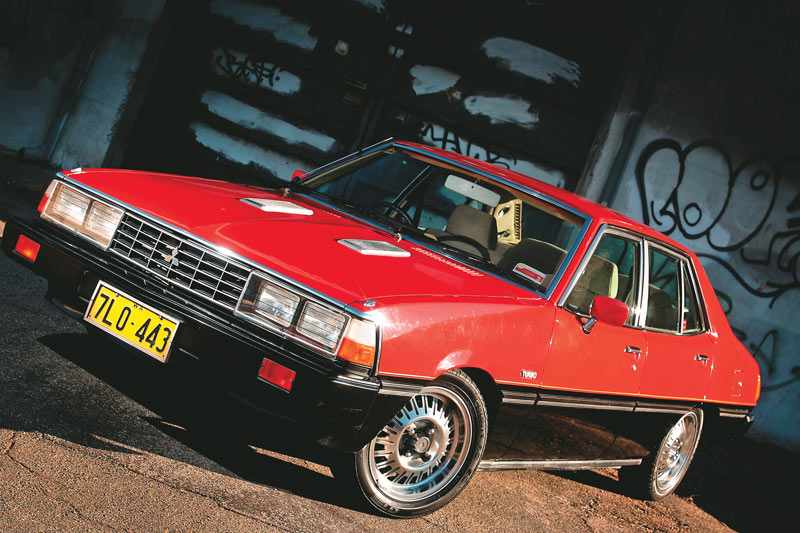
Turbo technology was in its infancy during the 1980s in terms of converting it to road applications and Japanese manufacturer Mitsubishi led the way for this in Australia.
Mitsubishi’s journey towards offering a turbo model in Australia begins when it purchased a 15 percent stake in Chrysler Australia a decade earlier in 1971.
Next, was the introduction of the Chrysler Sigma in 1977. The mid-sized sedan and wagon range proved popular early through its Astron engines that were reliable, yet powerful.
By the time the second generation of the Sigma arrived, it was rebranded to a Mitsubishi courtesy of the Japanese manufacturer’s purchase of Chrysler Australia in 1980.
It was during this second generation, Mitsubishi created a special edition Sigma featuring turbo technology.
The turbo’s history traces back to 1905, but automotive marques began researching how to apply the technology into its designed during the 1950s and it was Chevrolet offering it on the Corvair Monza alongside the Oldsmobile Jetfire in the early-1960s.
But it was Swedish manufacturer Saab, which took the technology mainstream during the 1970s with its 99 and it has grown to be a standard offering on many models since.
Mitsubishi offered the 2.0-litre 4G62 Astron four-cylinder engine as part of the Sigma range, which proved a solid package.
A collaboration between Normalair-Garrett and Mitsubishi resulted in the limited edition Turbo featuring a Garrett T3 unit lifting power to 116.4kW and torque to 235Nm.
Pairing with the increase in performance, the exterior featured an egg-crate grill, bonnet vents, special badging and two-tone paint options.
Just 500 were produced ensuring its is a highly collectable Australian-built model, which very few survive today.